lowchroma
공간유영장치 (2025)
A device that allows space to drift.
It continuously changes walls and transforms space, granting movement to what is normally static. Space inherently possesses the nature of stillness. Once constructed, it is difficult to alter. While other things rapidly change, space alone remains paused — firmly fixed in place. That immobility is the essential characteristic of space.
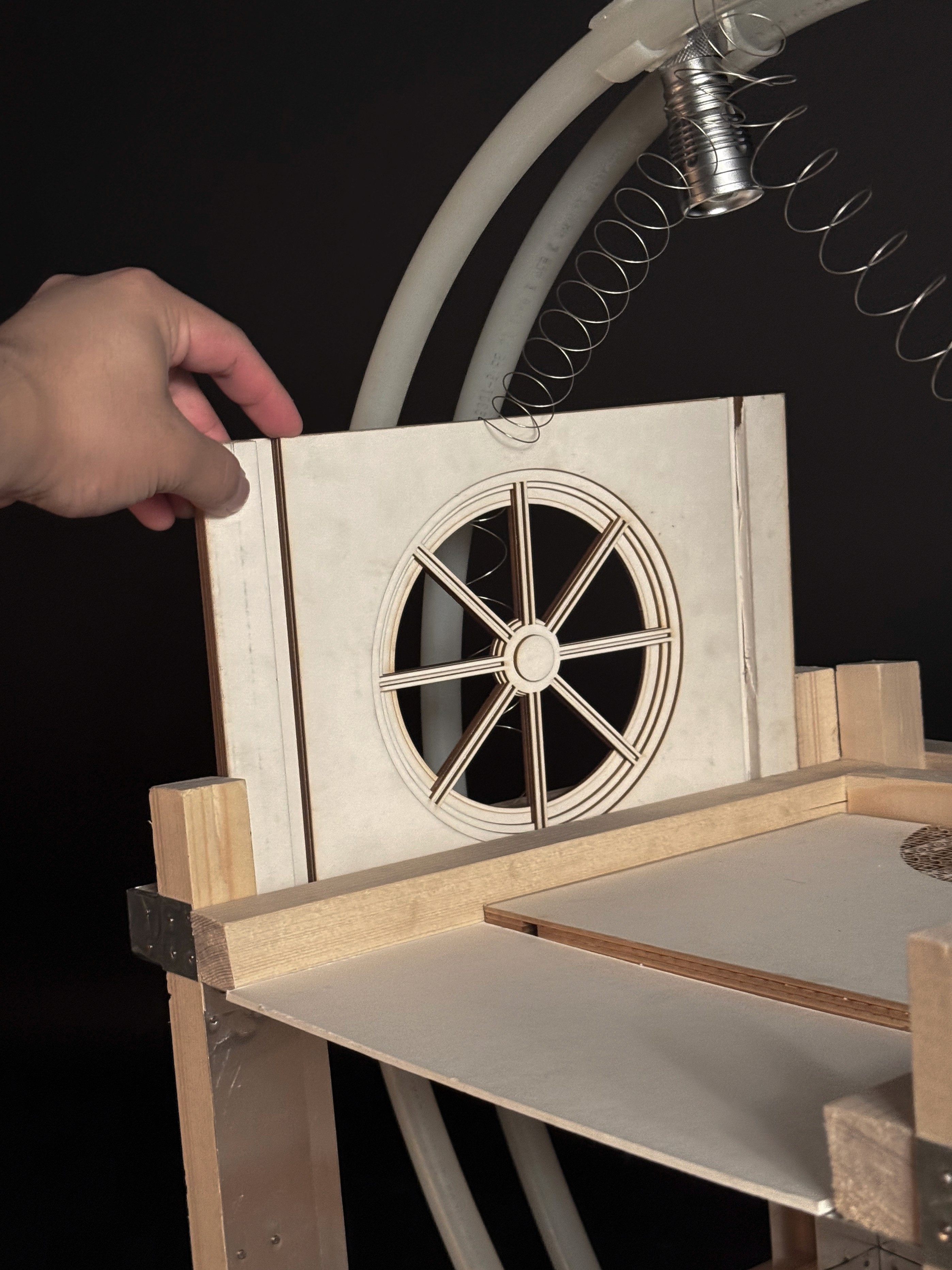
This device transforms the fixed nature of space into something mutable and mobile. Walls and floors, which are normally expected to remain still, can be replaced and reconfigured, allowing space to exist not in a single permanent state, but in a condition of continuous transformation. In this sense, the expression “space drifts” is used.
This concept stands in contrast to moving images. Video captures drifting things and preserves them like specimens. It seizes fragments that are constantly changing and floating, intensifying and clarifying them into memories. By filming a device that endlessly transforms itself, the moving image preserves a space that could never again exist in the same form.
In contemporary society, video media is produced and consumed at immense speed. Anyone can record footage with a mobile phone, and edit it effortlessly using AI tools or social media applications. Compared to the past, video has become a far more familiar and accessible medium for the public. This device allows walls and floors to be replaced intuitively and rapidly, while light sources attached to its surrounding rings make it possible to construct and observe space instantly, almost as though composing a moving image.
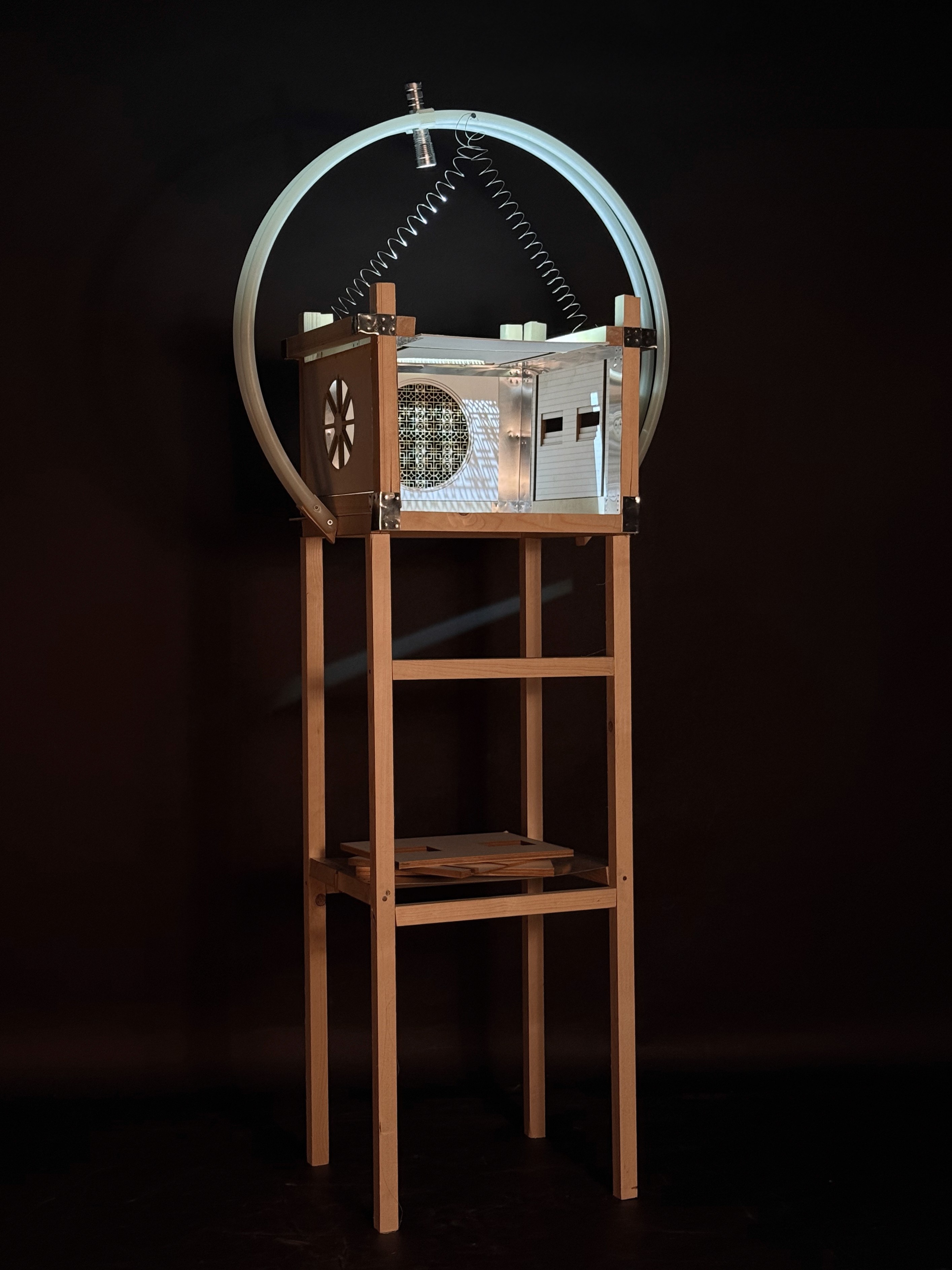
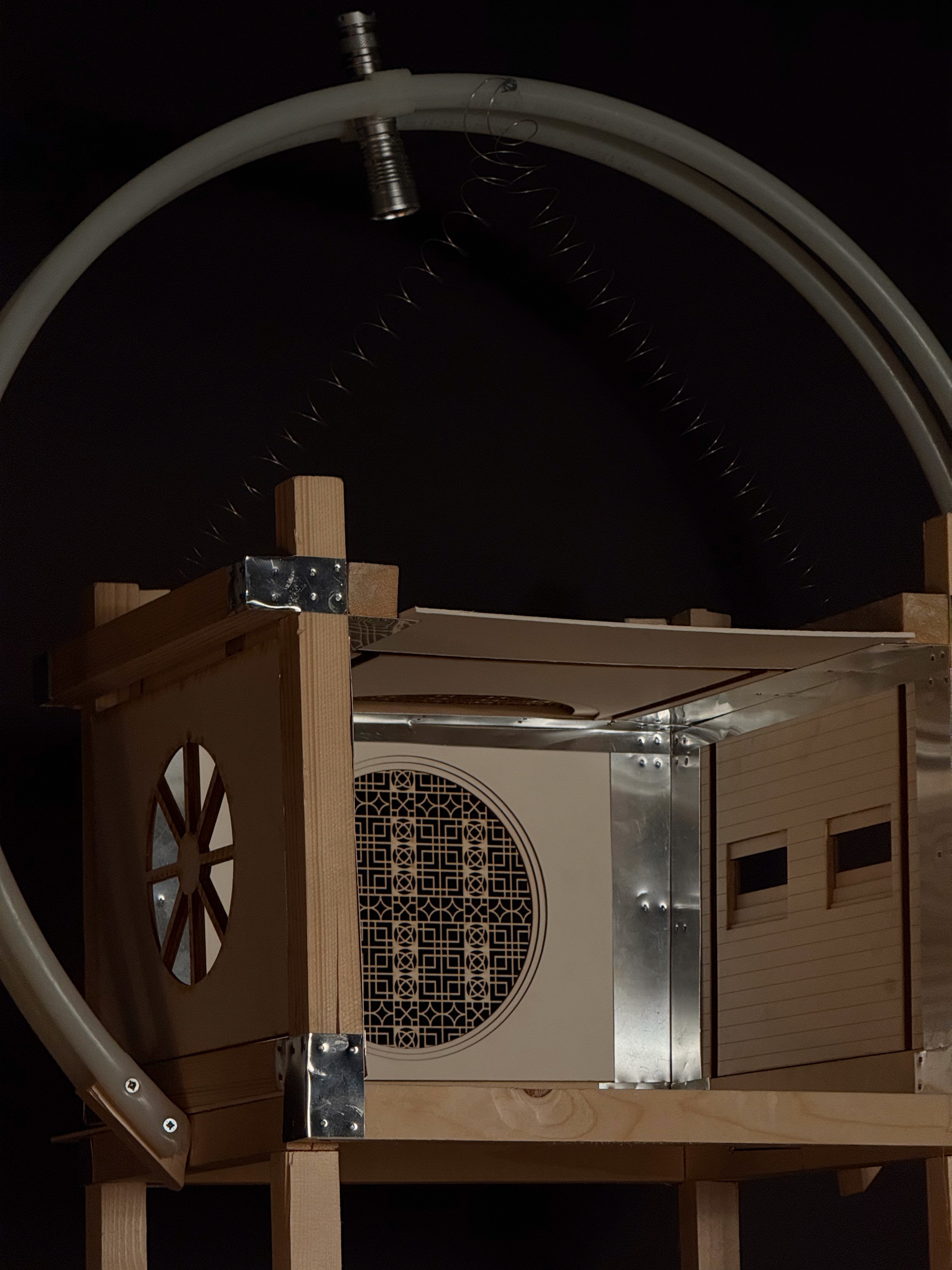
The primary material is wood, constructed using 25 mm timber studs. In order to create a rough, improvised, and inexpensive atmosphere, nails were used instead of screws, and every wooden component was cut manually rather than with automated tools. Metal was introduced as a contrasting cold material, intended to resonate with the atmospheric qualities of the science-fiction film Dune. Metal plates were also fixed using nails, reinforcing the timber joints so that the connected frames would not separate.
Three identical frames capable of holding interchangeable walls were produced and connected together, while the ceiling frame alone differs in proportion. The legs of the device were fabricated using the same method, and the metal plate located between the legs functions as storage for the interchangeable wall panels. A ring surrounding the device contains integrated light sources, allowing space and light to continuously interact and transform.
공간을 유영하는 장치. 끊임없이 벽을 바꾸고, 공간을 바꾼다. 공간에 움직임을 부여하는 것이다. 공간은 멈춤의 성질을 가진다. 한 번 만들면 쉽게 바꾸기 힘든 것이 공간이다. 다른 것들은 빠르게 바뀌어도, 공간만은 잠시 멈춰 있다. 그 자리에 굳건히 남아 있는 것, 그것이 공간이다.
이 장치는 멈춰 남겨져 있는 공간의 성질을 움직이는 성질로 바꾸어 주는 장치다. 가만히 있어야 하는 벽과 바닥을 교체하고 바꿀 수 있어, 한 가지 상태에만 머물러 있는 것이 아니라 변화하는 상태에 놓인다. 그런 의미에서 ‘공간이 유영한다’라는 표현이 사용되었다.
이것은 영상과 대비되는 개념이다. 영상은 유영하는 것들을 붙잡아 박제시킨다. 끊임없이 변화하고 떠다니는 것들을 포획하여 기억의 편린을 더욱 강렬하고 뚜렷하게 만든다. 정지와 포획의 성질을 가지고 있는 영상이 끊임없이 변화하는 장치를 촬영함으로써, 이제 다시는 볼 수 없었을 공간을 박제시킨다.
현대 사회에서 영상 매체는 매우 빠르게 생성되고 소비되는 형태를 띤다. 누구나 자신의 휴대전화로 촬영이 가능하며, AI 툴이나 소셜 미디어 앱을 이용해 손쉽게 편집할 수 있다. 과거와 비교하면 영상은 대중에게 훨씬 쉽고 친숙한 매체가 된 것이다.
이 장치는 벽과 바닥을 직관적이고 빠르게 교체할 수 있으며, 장치의 고리에 광원이 달려 있어 공간과 빛을 영상처럼 즉석에서 만들고 관찰할 수 있게 한다.
주재료는 나무이며, 25mm 각목을 사용했다. 투박하고 즉흥적인, 값싼 느낌을 연출하기 위해 피스 대신 못을 사용했고, 각목은 자동 공구가 아닌 수공구로 모두 재단했다. 나무와 대비되는 차가운 소재로 금속을 사용했으며, 이는 SF 영화 『듄』의 장르적 분위기와 조화를 이루기 위함이다. 철판 또한 못으로 고정했으며, 못으로 연결된 각목이 벌어지지 않도록 철판을 덧댔다.
벽을 끼울 수 있는 동일한 틀 3개를 제작해 연결했고, 천장만 틀의 비율이 다르다. 장치의 다리 또한 같은 방식으로 제작했으며, 다리 중간에 있는 철판은 장치에 끼울 벽을 보관하는 용도이다. 장치를 두르고 있는 고리에는 광원이 설치되어 있다.
A device that allows space to drift.
It continuously changes walls and transforms space, granting movement to what is normally static. Space inherently possesses the nature of stillness. Once constructed, it is difficult to alter. While other things rapidly change, space alone remains paused — firmly fixed in place. That immobility is the essential characteristic of space.
This device transforms the fixed nature of space into something mutable and mobile. Walls and floors, which are normally expected to remain still, can be replaced and reconfigured, allowing space to exist not in a single permanent state, but in a condition of continuous transformation. In this sense, the expression “space drifts” is used.
This concept stands in contrast to moving images. Video captures drifting things and preserves them like specimens. It seizes fragments that are constantly changing and floating, intensifying and clarifying them into memories. By filming a device that endlessly transforms itself, the moving image preserves a space that could never again exist in the same form.
In contemporary society, video media is produced and consumed at immense speed. Anyone can record footage with a mobile phone, and edit it effortlessly using AI tools or social media applications. Compared to the past, video has become a far more familiar and accessible medium for the public. This device allows walls and floors to be replaced intuitively and rapidly, while light sources attached to its surrounding rings make it possible to construct and observe space instantly, almost as though composing a moving image.
The primary material is wood, constructed using 25 mm timber studs. In order to create a rough, improvised, and inexpensive atmosphere, nails were used instead of screws, and every wooden component was cut manually rather than with automated tools. Metal was introduced as a contrasting cold material, intended to resonate with the atmospheric qualities of the science-fiction film Dune. Metal plates were also fixed using nails, reinforcing the timber joints so that the connected frames would not separate.
Three identical frames capable of holding interchangeable walls were produced and connected together, while the ceiling frame alone differs in proportion. The legs of the device were fabricated using the same method, and the metal plate located between the legs functions as storage for the interchangeable wall panels. A ring surrounding the device contains integrated light sources, allowing space and light to continuously interact and transform.
공간을 유영하는 장치. 끊임없이 벽을 바꾸고, 공간을 바꾼다. 공간에 움직임을 부여하는 것이다. 공간은 멈춤의 성질을 가진다. 한 번 만들면 쉽게 바꾸기 힘든 것이 공간이다. 다른 것들은 빠르게 바뀌어도, 공간만은 잠시 멈춰 있다. 그 자리에 굳건히 남아 있는 것, 그것이 공간이다.
이 장치는 멈춰 남겨져 있는 공간의 성질을 움직이는 성질로 바꾸어 주는 장치다. 가만히 있어야 하는 벽과 바닥을 교체하고 바꿀 수 있어, 한 가지 상태에만 머물러 있는 것이 아니라 변화하는 상태에 놓인다. 그런 의미에서 ‘공간이 유영한다’라는 표현이 사용되었다.
이것은 영상과 대비되는 개념이다. 영상은 유영하는 것들을 붙잡아 박제시킨다. 끊임없이 변화하고 떠다니는 것들을 포획하여 기억의 편린을 더욱 강렬하고 뚜렷하게 만든다. 정지와 포획의 성질을 가지고 있는 영상이 끊임없이 변화하는 장치를 촬영함으로써, 이제 다시는 볼 수 없었을 공간을 박제시킨다.
현대 사회에서 영상 매체는 매우 빠르게 생성되고 소비되는 형태를 띤다. 누구나 자신의 휴대전화로 촬영이 가능하며, AI 툴이나 소셜 미디어 앱을 이용해 손쉽게 편집할 수 있다. 과거와 비교하면 영상은 대중에게 훨씬 쉽고 친숙한 매체가 된 것이다.
이 장치는 벽과 바닥을 직관적이고 빠르게 교체할 수 있으며, 장치의 고리에 광원이 달려 있어 공간과 빛을 영상처럼 즉석에서 만들고 관찰할 수 있게 한다.
주재료는 나무이며, 25mm 각목을 사용했다. 투박하고 즉흥적인, 값싼 느낌을 연출하기 위해 피스 대신 못을 사용했고, 각목은 자동 공구가 아닌 수공구로 모두 재단했다. 나무와 대비되는 차가운 소재로 금속을 사용했으며, 이는 SF 영화 『듄』의 장르적 분위기와 조화를 이루기 위함이다. 철판 또한 못으로 고정했으며, 못으로 연결된 각목이 벌어지지 않도록 철판을 덧댔다.
벽을 끼울 수 있는 동일한 틀 3개를 제작해 연결했고, 천장만 틀의 비율이 다르다. 장치의 다리 또한 같은 방식으로 제작했으며, 다리 중간에 있는 철판은 장치에 끼울 벽을 보관하는 용도이다. 장치를 두르고 있는 고리에는 광원이 설치되어 있다.